
Target Audience & Website Design
Different Audience Different Website
The same business can need very different websites depending on who the site is actually for. Audience clarity influences everything, from layout and colour to tone, structure, and calls to action.
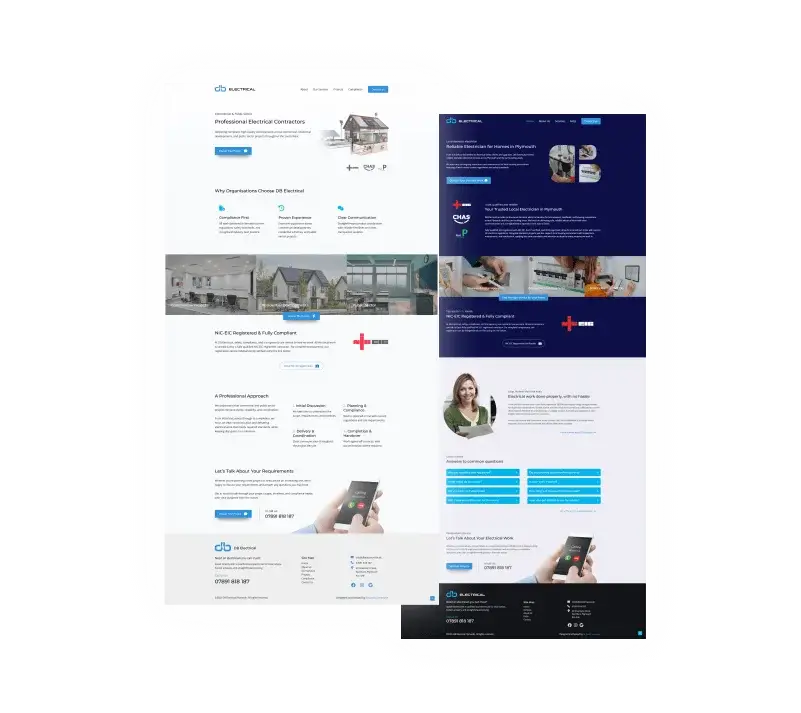
In this example, the same electrical contractor required two homepage concepts. One designed for councils, housing associations, and commercial partners. The other designed for domestic homeowners. Same services, same qualifications, but very different signals, priorities, and outcomes.
Why Audience Clarity Matters
When a website is designed without a clear understanding of who it is speaking to, it often ends up trying to appeal to everyone and connecting with no one. Different audiences arrive with different expectations, concerns, and decision-making triggers, even when the service itself stays exactly the same.
By identifying the audience first, design decisions become intentional rather than cosmetic. Layout, messaging, visual tone, trust signals, and calls to action can all be shaped to reflect what that specific audience needs to see in order to feel confident, informed, and ready to take the next step.
What Changes When the Audience Changes
When the target audience changes, the website is no longer answering the same questions or addressing the same concerns. Even though the services remain identical, the way information is presented needs to shift to reflect what that audience values most.
For commercial and public-sector decision-makers, clarity, compliance, and process are often the priority. For domestic homeowners, reassurance, approachability, and trust tend to come first. These differences influence how a website is structured, what information is surfaced early, and how users are guided through the page.
A Real Example in Practice
How the Same Business Needed Two Approaches
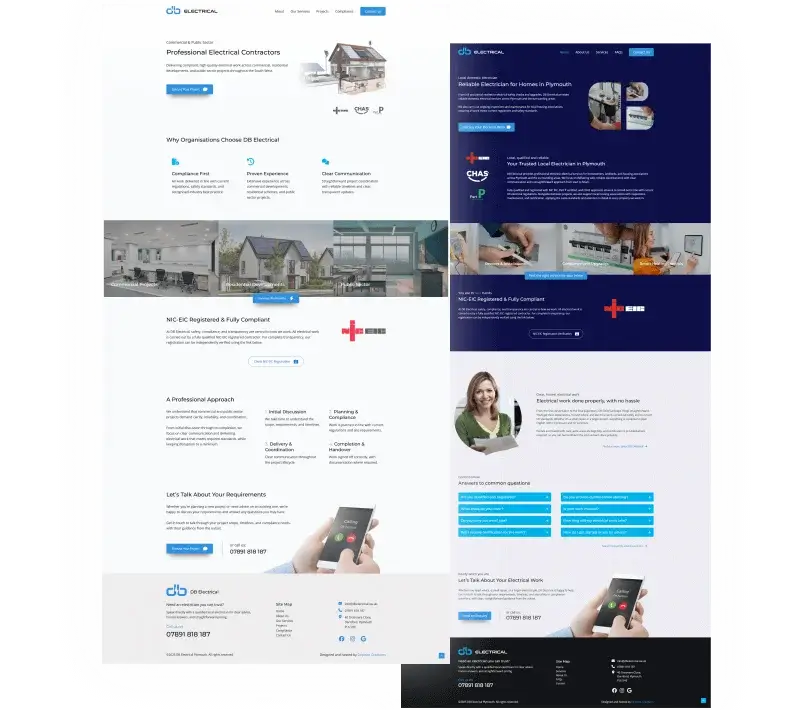
Although the services and qualifications remained exactly the same, the two homepage concepts were structured very differently. The version aimed at councils and commercial partners prioritised compliance, accreditation, and clear process-led information, while the domestic version focused more on reassurance, clarity, and approachability.
Both designs used the same core brand, but the way content was ordered, how trust was communicated, and where attention was drawn changed to reflect what each audience needed to see first. This ensured each version felt relevant and credible to the people it was designed to speak to, rather than trying to serve everyone at once.
Why Audience Comes First
When a website is designed around a clearly defined audience, every decision becomes more focused and intentional. Rather than trying to appeal broadly, the site communicates the right signals to the right people, making it easier for them to trust the business, understand its value, and take action with confidence.
Lay the Foundations for Your Business
You’ve seen how audience clarity and thoughtful website decisions shape real outcomes for trade businesses. If you’d like to explore how the same principles could apply to your own site, you can take the next step in whatever way feels right.